THE HEALTHY LIVING JOURNAL
Healthy Snacks on a Budget: Simple Combinations That Travel Well
Build affordable snacks from familiar foods, compare cost per portion, and keep perishable ingredients safely chilled when you leave home.
General educational information · Sources listed below
Plan for the gap between meals
A useful snack solves a real problem: you are hungry, your next meal is some time away, and you need something available. It does not have to come in a package marked “healthy,” and it does not need a long list of expensive ingredients. Familiar groceries can often do the job.
Start by noticing when you usually buy an unplanned snack. Is it during a commute, after an appointment, or between afternoon tasks? Planning for one predictable moment can be easier than preparing a perfect menu for every day of the week.
Choose a combination you enjoy
Fruit, vegetables, whole grains, beans, yogurt, nuts, and seeds offer several ways to assemble a snack. Pairing foods can add variety: an apple with peanut butter, vegetables with hummus, or plain yogurt with oats. Adjust ingredients for allergies, appetite, and any individual dietary advice. [1]
Think about texture and convenience too. A combination that sounds ideal on paper may not work if it spills in your bag or needs utensils you never carry. Choose a container you already own and foods that suit the place where you actually eat.
Compare cost per usable portion
A large package can be economical if you will use it, but the lowest shelf price is not automatically the best value. Compare unit prices and consider how much food you might waste. A smaller container that gets eaten can be a better purchase than a bargain that spoils. [2]
Make a short list of snack ingredients that also work in meals. Oats can become breakfast, beans can become a dip or dinner ingredient, and fruit can be eaten on its own. Overlapping uses reduce the number of separate products you need to buy.
Keep a shelf-stable option ready
Whole fruit that does not require refrigeration, a suitable portion of nuts, or whole-grain crackers can be useful when you cannot carry a cooler. Check package directions, because some products that seem shelf-stable need refrigeration after opening. [3]
An emergency snack need not replace a meal. Its purpose may simply be to bridge an unexpected delay. Keep it somewhere you will remember, and check the package occasionally so the food does not remain forgotten at the bottom of a bag.
Treat cold storage as part of preparation
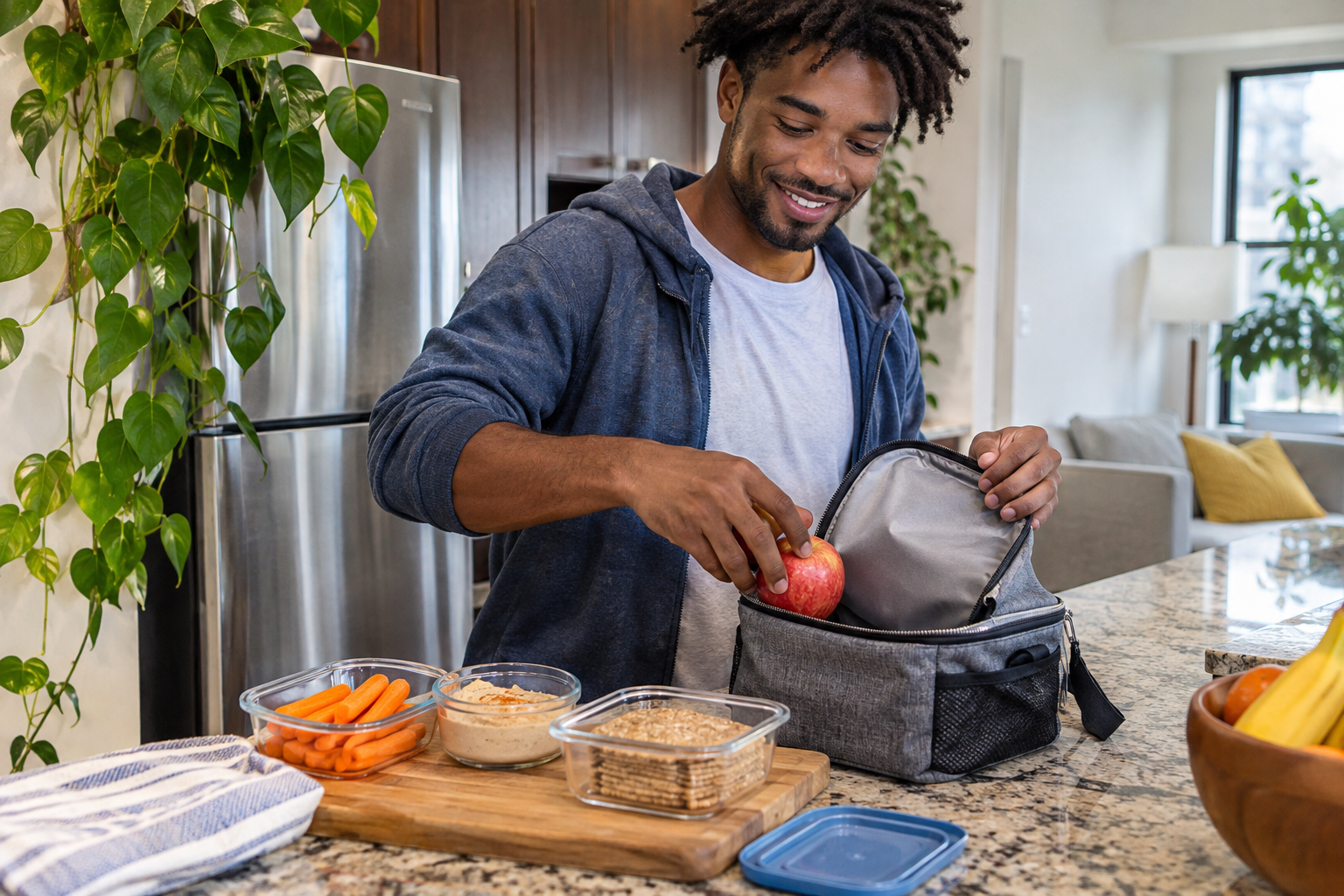
Yogurt, hummus, and other perishable foods need appropriate temperature control. USDA recommends an insulated lunch bag and at least two cold sources when packing perishable items away from home. Refrigerate them when you arrive if a refrigerator is available. [3]
An attractive reusable container does not keep food cold by itself. Plan the journey, the time until eating, and where you will store the bag. If you cannot maintain safe storage, choose a different snack rather than relying on its smell or appearance to judge safety.
Prepare enough to be useful
Try assembling two or three snack portions at a time instead of preparing a large batch you may not want later. Wash produce using safe handling practices, use clean containers, and follow storage directions. Keeping a few components ready can make assembly quick without committing you to the same snack every day.
For example, keep fruit visible, portion crackers into a container, and add a chilled item only when you can transport it safely. The goal is to reduce the decisions made when you are already hungry, not to create an elaborate weekend project.
Let appetite guide the final choice
You may want a snack on an active day and none on another. There is no requirement to eat simply because a schedule says it is snack time. Likewise, persistent hunger may mean your meals need attention rather than that you need a more complicated snack product.
Choose one affordable combination for your next busy day and evaluate it afterward. Was it convenient, satisfying, and easy to keep safe? Those answers help you develop a routine that fits your life. People with medical nutrition needs should adapt timing and ingredients with their care team.
Explore the sources
- CDC: Healthier Meals and Snacks ↗
- Academy of Nutrition and Dietetics: Eating on a Budget ↗
- USDA: Keeping Bag Lunches Safe ↗
Prepared with AI assistance for True Healthy Products LLC. Sources inform this educational guide; their inclusion does not imply endorsement of our company or products. See our editorial approach.