THE HEALTHY LIVING JOURNAL
A Home Fall-Prevention Walkthrough: Where to Start Room by Room
Review everyday routes, lighting, reach, and support points, then turn observations into a manageable home-safety plan.
General educational information · Sources listed below
Begin with the routes you use most
A home-safety review does not need to start with an expensive renovation. Begin with the trips you make repeatedly: bed to bathroom, chair to kitchen, and front door to the place you leave your belongings. Familiarity can make a loose cord or dim corner easy to overlook until someone points it out.
CDC recommends removing things you can trip over, improving lighting, adding appropriate bathroom grab bars, and using railings on both sides of stairs. These changes address the surroundings; they complement rather than replace attention to balance, vision, medicines, and other individual fall risks. [1]
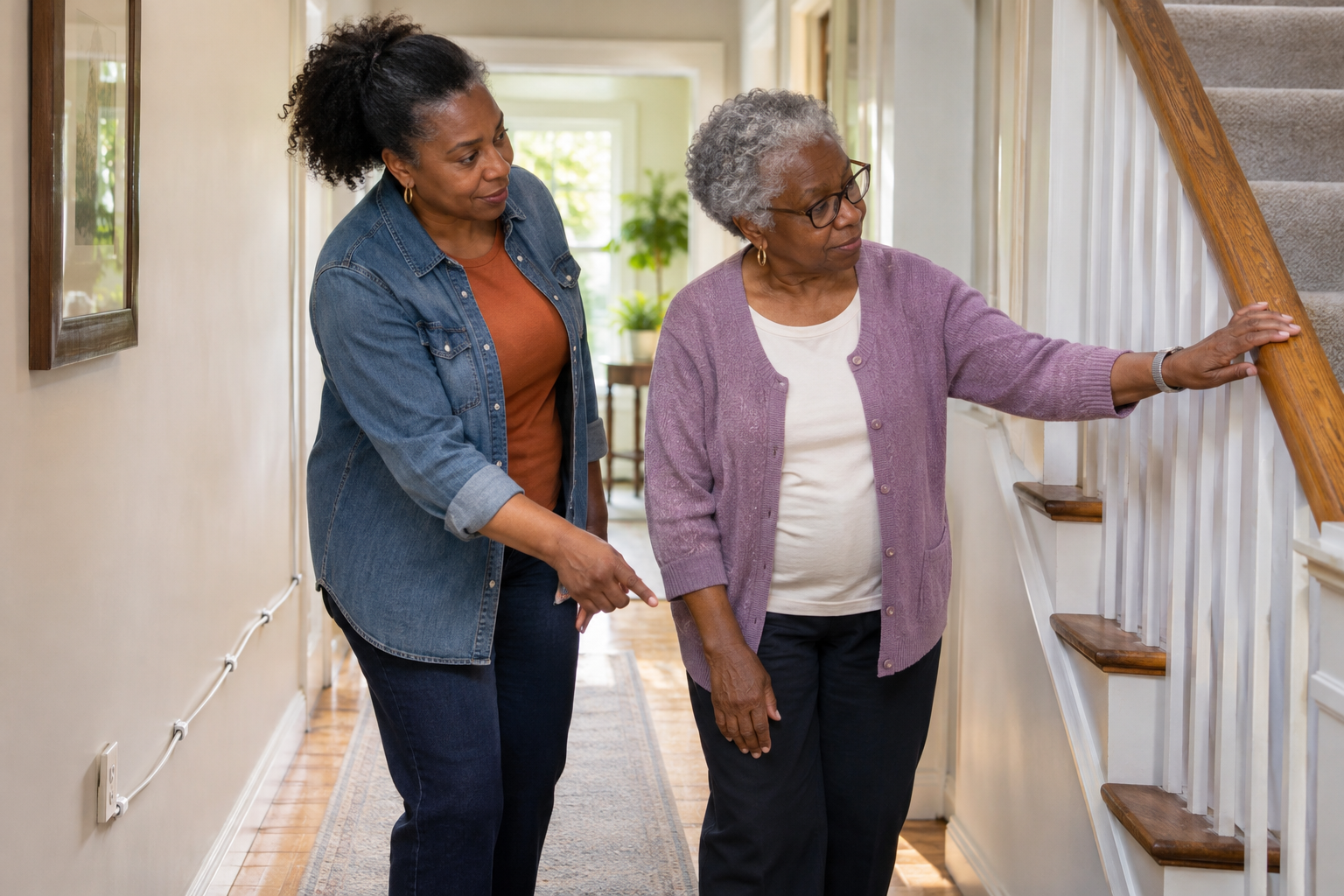
Ask someone you trust to walk through with you, if that would be useful. Explain which routines matter to you before discussing changes. The person who lives in the home should help choose the priorities. A practical plan respects familiar belongings while making it easier to move through the space safely.
Clear the bedroom-to-bathroom path
Look at the route at the time you normally use it, including after dark. MedlinePlus advises good lighting along the bedroom-to-bathroom path, in bathrooms, and on stairs. Check where switches are located and whether you can reach needed items without stepping around a basket or bag. [2]
Create a regular place for slippers, laundry, and charging cables outside the walking path. Move one item at a time and tell others in the household where it now belongs. A clear route is easier to maintain when every displaced object has a sensible destination rather than being stacked in another passageway.
Check floors and everyday reach
Loose rugs, wires, and uneven flooring deserve attention. MedlinePlus recommends removing loose throw rugs and cords from walking areas and addressing uneven doorway flooring. It also advises against standing on chairs or stepladders to reach things. Move frequently used belongings to accessible storage instead. [2]
For example, keep the mug you use every morning on a reachable shelf rather than above a refrigerator. If a heavy appliance requires awkward lifting, discuss a better storage arrangement. These are opportunities to simplify the routine, not reasons to attempt repairs or move heavy furniture alone during the walkthrough.
Treat support points as a separate project
A towel rail is not automatically a safe substitute for an installed grab bar. CDC specifically identifies grab bars around the tub or shower and next to the toilet, along with stair railings, as home-safety measures. Arrange appropriate installation rather than testing whether an improvised support can hold your weight. [1]
Keep a separate list for changes that need a landlord, qualified installer, or professional assessment. Include the location and the task that is difficult there. A note such as 'need stable support getting in and out of shower' is more useful than a vague request to make the bathroom safer. Ask who will follow up and when.
Include the entryway and changing conditions
The walkthrough should include the place where wet shoes, packages, and groceries arrive. Decide where these items can go without narrowing the route. Review the lighting you depend on when returning home after sunset. A clear entry during the afternoon may look different when coats, bags, and deliveries accumulate later.
Consider how seasonal routines change the space. An umbrella stand, holiday decoration, or extra heater can introduce a new obstacle. You do not need to predict every possible problem, but you can revisit the route whenever a new item changes how people move through it. Keep exits and frequently traveled passages usable.
Bring personal risks to a health conversation
A safer room cannot explain every near-fall. CDC recommends asking a clinician to assess fall risk and having a doctor or pharmacist review medicines that may cause dizziness or sleepiness. Do not stop a prescription on your own while trying to reduce risk. Report falls and near-falls rather than waiting for an injury. [1,2]
If reviewing the home is difficult, ask your health care provider about help with a home-safety assessment. Bring your short list of troublesome tasks and any recent incidents. A professional may identify needs that are not obvious from a simple checklist, including whether additional mobility support or rehabilitation guidance would be appropriate. [2]
Finish with a small action list
Divide your observations into changes you can safely make now and changes requiring assistance. Assign a person and a next step to each larger item. Photographing the room for your own reference can help you explain a problem, but never climb, balance, or demonstrate an unsafe movement just to show what happens.
Revisit the list after changes are made. Ask whether the new arrangement is easier to use during ordinary routines. Home safety is an ongoing adjustment to how you live, not a one-time score that proves a fall cannot happen.
Explore the sources
Prepared with AI assistance for True Healthy Products LLC. Sources inform this educational guide; their inclusion does not imply endorsement of our company or products. See our editorial approach.