THE HEALTHY LIVING JOURNAL
How to Store Medicines Safely at Home as You Age
Review storage instructions, choose a secure location, and plan for visitors, travel, and unused medicines with a practical home routine.
General educational information · Sources listed below
Start with the directions on each medicine
A medicine-storage routine should begin with the instructions supplied with that particular product. Most medicines belong in a cool, dry place, but some require refrigeration or other special conditions. Read the label and patient information, and ask your pharmacist when a storage instruction is unclear. [1]
Choose a time when you can look at the containers without rushing. Your first task is to identify any special requirements, then decide where each medicine belongs. A short conversation with the pharmacy can be more useful than buying an organizer before you know what needs to be stored.
Review heat, moisture, and light
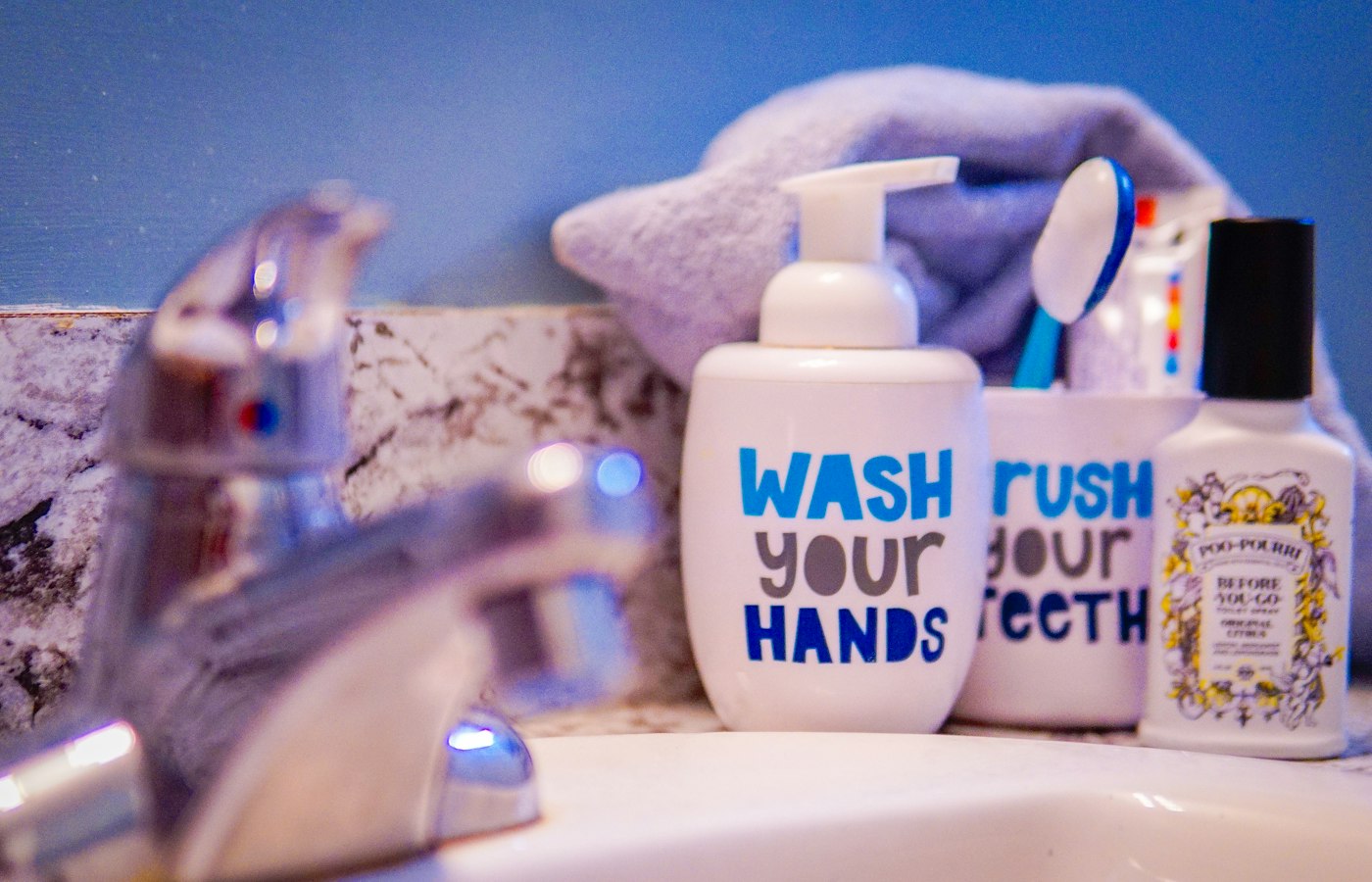
A familiar bathroom cabinet may expose medicines to warmth and moisture from showers and sinks. MedlinePlus advises protecting medicines from heat, air, light, and moisture and keeping them in their original containers. A dry storage location away from cooking heat may be a better match for many products. [2]
Think about the location through an ordinary day. Does afternoon sun fall on the shelf? Is the box beside a radiator or above a kettle? Does anyone move it while cleaning? These observations give you specific questions to discuss with the pharmacist, especially if your home has limited storage space.
Choose a secure location you can use safely
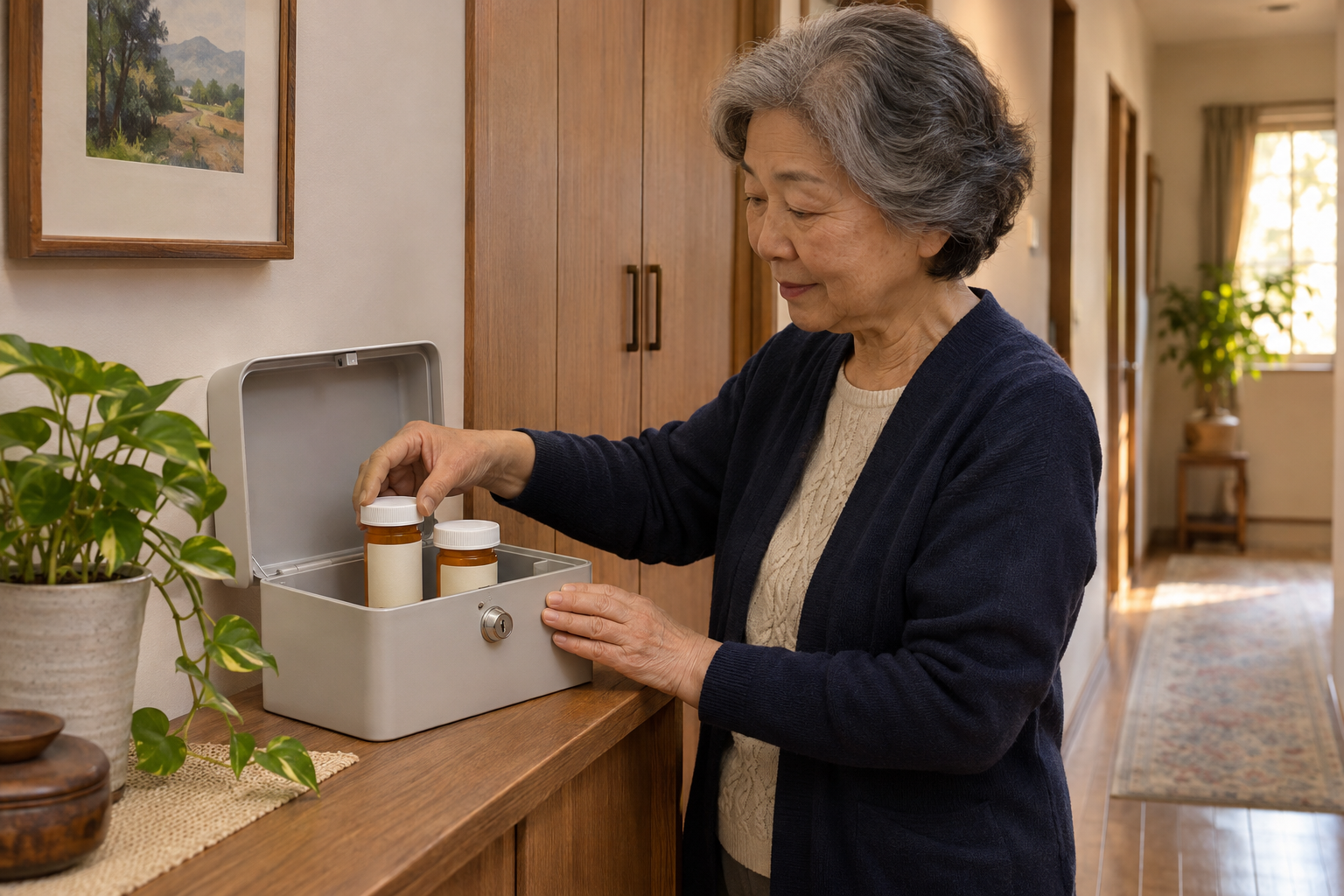
EPA recommends a locked cabinet, closet, or other robust locking compartment to prevent unwanted access to household medicines. This matters even when children visit only occasionally. Include nonprescription medicines in your review, and consider who can reach handbags, overnight bags, and bedside surfaces. [3]
At the same time, your own access needs attention. A high shelf can become impractical if reaching it requires climbing or stretching. Ask a trusted helper or your care team to help you find a secure arrangement that you can operate comfortably. Discuss any medicines that need rapid access with your pharmacist.
Keep identification close to the product
The container and pharmacy information help you identify a medicine and check its instructions. If you use a weekly organizer, ask your pharmacist whether each product is suitable for transfer and how to retain the information you need. Avoid relying on a tablet's color or a memory of the bottle. [1,2]
If small print, stiff caps, or a difficult lock causes trouble, describe the exact problem at the pharmacy. Bring the packaging when practical. A workable routine needs to account for vision, grip, and reach, as well as the place where the medicines are kept. Keep visitors' access in mind when discussing packaging options.
Make a plan for travel and visitors
Before a trip, ask about storage requirements during the journey and at your destination. FDA cautions against exposing medicines to extreme temperatures, including leaving them in a car during summer or winter. Follow the specific instructions for products that require refrigeration rather than assuming any cooler arrangement will work. [1]
For a short family visit, decide where your bag will go before you arrive. A zipped bag on a chair may still be accessible to a child. Ask about a secure location and return medicines there after use. The same planning can help when someone visits your home with their own medicines.
Review dates and storage problems
Include expiration dates in a periodic check. FDA warns that medicines can become less effective or harmful when expired or stored improperly. If a container has been exposed to unsuitable temperatures or you notice an unexpected change, contact the pharmacist for advice about that specific product and any replacement needed. [1]
Have the name, strength, container, and details of the incident available when you call. Explain roughly how long the exposure lasted and what happened. Do not guess whether a medicine is still usable from appearance alone, and do not improvise a different dose to compensate for a storage problem.
Give unused medicines a clear next step
EPA recommends drug take-back options when available for unwanted household medicines. Ask a local pharmacy which collection services it offers and what it accepts. A medicine that is awaiting disposal still needs secure storage while it remains in your home. [3]
Finish with one manageable improvement, such as finding the instructions for a refrigerated product, choosing a secure dry cabinet, or arranging a take-back visit. Keep a short list of unresolved questions for the pharmacist. A routine that fits your home is easier to maintain when prescriptions change or travel interrupts the usual day.
Explore the sources
- FDA: Medication Safety Tips for Older Adults ↗
- MedlinePlus: Storing Your Medicines ↗
- EPA: Safe Storage of Medicines in the Home ↗
Prepared with AI assistance for True Healthy Products LLC. Sources inform this educational guide; their inclusion does not imply endorsement of our company or products. See our editorial approach.