THE HEALTHY LIVING JOURNAL
How to Choose Walking Shoes That Fit Your Feet and Routine
Compare walking shoes by fit, toe room, support, and the way you will use them, rather than relying on appearance or a familiar size alone.
General educational information · Sources listed below
Begin with your feet and your routine
The best walking shoe for someone else may not suit your feet. Fit, comfort, the walking surface, and any foot condition matter more than a popular brand or a shoe that looks particularly athletic. Start with how and where you expect to use it. [1]
Think about your ordinary walk: an indoor corridor, a paved neighborhood route, or an uneven outdoor path. Also consider the socks, braces, or inserts you normally wear. A shoe should work with the actual routine, not only feel appealing during a quick look in the shop.
Try the fit rather than trusting the number
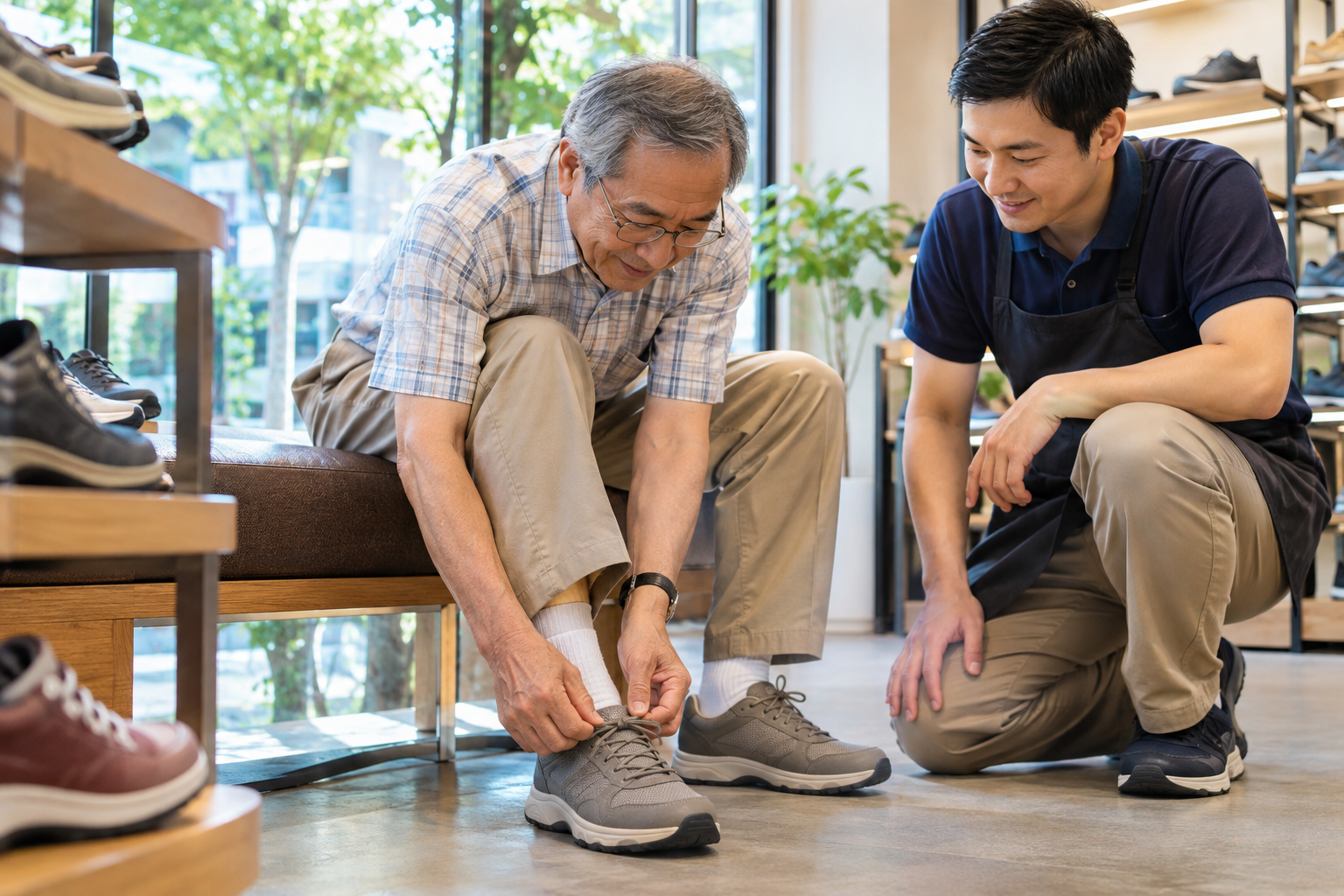
Feet can change over time, and sizing differs between brands and styles. Have your feet measured when possible and try both shoes. Do not assume that a size you wore years ago will always be the right choice. Choose for the larger foot if the two differ. [1,2]
Wear the socks you plan to walk in and bring any prescribed insert or orthotic. That avoids assessing the shoe in a configuration you will not use later. Check the store's return policy so you understand your options if a careful indoor trial reveals a problem.
Check toe room and heel movement
Your toes need room without the shoe feeling loose overall. Pay attention to pressure across the forefoot, rubbing over prominent areas, and slipping at the heel. A shoe that feels tight or painful in the shop should not be purchased on the assumption that discomfort is necessary for breaking it in. [1]
Walk around and notice what happens when you turn or change pace. Lacing can influence fit, but it cannot solve every mismatch between the shoe's shape and your foot. Try another width or style rather than repeatedly tightening a shoe that pinches in one place and slips in another.
Match useful features to the task
A secure fastening, stable sole, and appropriate traction can matter for your route. Consider whether you can put the shoes on and take them off comfortably. If bending or hand movement is difficult, a different fastening may be more practical than a conventional lace setup. [1,2]
Avoid choosing by softness alone. A shoe can feel plush while still fitting poorly or being unsuitable for the surface. Conversely, a shoe with many technical features may offer little benefit if it causes rubbing. Comfort and task suitability should be assessed together.
Get advice for an existing foot problem
Persistent foot pain, numbness, deformity, or a history of wounds deserves professional advice. Diabetes, poor circulation, or reduced sensation may change the footwear guidance you need. A shoe recommendation for the general public cannot replace an individual assessment. [2]
If you already have a prescribed orthotic, ask whether a new shoe needs a particular depth or removable insole. Do not discard the device because it does not fit the first pair you try. The clinician who recommended it can help explain how it should work with your footwear.
Review shoes you already own
Inspect the soles, upper, fastening, and lining. Notice uneven wear, loss of traction, or a change in how securely the shoe holds your foot. An old shoe may still look presentable while no longer working well for the activity you use it for. [1]
There is no single replacement date that fits every person and pair. Frequency of use, surface, construction, and the way the shoe wears all matter. Use condition and function as prompts for review rather than waiting for the shoe to become visibly damaged or uncomfortable.
Make the final decision practical
Choose a pair you can use comfortably with your normal socks and support, within a budget you can manage. A sensible purchase does not have to be the most expensive option. Give yourself time to compare fit instead of making the decision at the last minute before a planned long walk.
After a short initial walk, check for rubbing or pressure and adjust your plans if needed. If discomfort persists, seek help rather than extending the walk in hopes that the problem will disappear. Shoes should support your activity, while recurring foot symptoms deserve their own attention.
Explore the sources
Prepared with AI assistance for True Healthy Products LLC. Sources inform this educational guide; their inclusion does not imply endorsement of our company or products. See our editorial approach.