THE HEALTHY LIVING JOURNAL
Shared Showers: Everyday Habits to Help Prevent Athlete’s Foot
Plan shower footwear, dry socks and a simple gym-bag reset to reduce athlete’s-foot risk in shared spaces.
General educational information · Sources listed below
Start with the trip through the changing room
A swim or workout can involve several footwear changes: street shoes at the entrance, bare feet near a bench, then a shower before heading home. Planning those transitions makes basic foot care easier to remember. Athlete’s foot is a fungal infection, and shared damp spaces can provide an opportunity for exposure. The aim is to reduce risk with repeatable habits, rather than assume that a floor looks safe because it looks clean.
You do not need to be an athlete to get it. The American Academy of Dermatology recommends protective footwear in places such as public showers, pool areas and locker rooms. A useful starting point is to think through your own route before the next visit: where do you change, where are your shoes stored, and at what point do your feet touch the floor?
Pack footwear where you can reach it
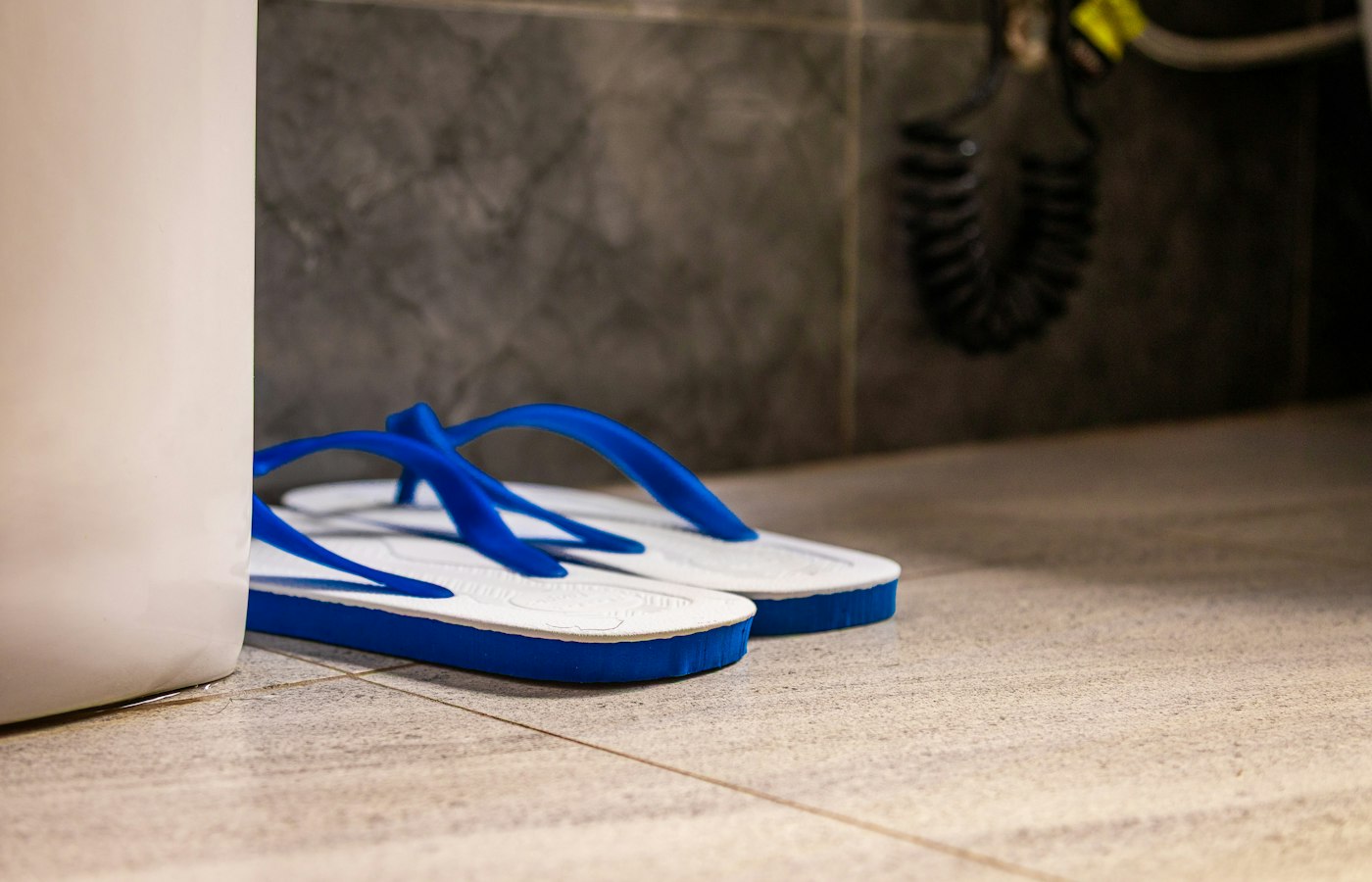
Keep shower shoes or flip-flops accessible in your bag so you can put them on before entering shared wet areas. Leave them on for the shower itself. Choose footwear you can walk in securely, and follow the facility’s rules about poolside shoes. A pair buried under a towel is easier to forget than one placed alongside the items you take out first.
Make the packing routine fit the activity. For a lunchtime gym visit, place your shower footwear with your change of clothes. For a weekend swim, check the bag before leaving home. These small organizational choices do not make shoes a guarantee against infection; they simply make recommended protection easier to use consistently.
Give drying its own moment
After washing, dry your feet carefully, including the spaces between your toes. The NHS advises gently dabbing rather than rubbing. Allow enough time for this step instead of rushing directly from the shower into socks. If the changing area is crowded, organize your towel and clean clothing before showering so you are not searching for them with wet feet.
Carry clean socks and replace them if they become damp. CDC guidance emphasizes clean, dry skin, daily sock changes and shoes that allow air circulation. A spare pair can be useful when you expect to exercise before a long commute. Keep the spare in a recognizable place so it does not become mixed up with the pair you have already worn.
Reset the bag when you get home
Use unpacking as the end of the routine. Take out used clothing and towels instead of leaving them forgotten until the next visit. Follow their care labels for washing and drying. Check the bag’s pockets before putting it away; a quick reset is easier than discovering an unusable towel when you are already at the gym.
AAD also recommends alternating everyday shoes when possible so each pair has time to dry. Consider where tomorrow’s pair will come from while you unpack today’s gear. Keep towels, socks and shoes personal rather than borrowing them from someone else. Household members can use separate storage spaces or clearly different towels to make that arrangement easier to follow.
Know when prevention advice is not enough
Itching, peeling or cracking between the toes can occur with athlete’s foot, but an article cannot establish the cause of a foot rash. Ask a pharmacist or clinician about persistent symptoms rather than repeatedly switching products based on appearance alone. Note when the problem began and what you have already used so the conversation starts with a clear account.
The NHS recommends medical advice when pharmacy treatment has not worked, symptoms spread, or there is substantial pain. A hot, painful, red foot or leg needs prompt medical assessment because a more serious infection is possible; redness may be less visible on darker skin. People with diabetes or weakened immune systems should seek medical advice about suspected athlete’s foot. Keep the prevention routine practical, and get an assessment when symptoms need more than routine care.
Explore the sources
- American Academy of Dermatology: How to prevent athlete’s foot ↗
- CDC: Ringworm Prevention ↗
- NHS: Athlete’s foot ↗
Prepared with AI assistance for True Healthy Products LLC. Sources inform this educational guide; their inclusion does not imply endorsement of our company or products. See our editorial approach.