THE HEALTHY LIVING JOURNAL
How to Prevent Foot Blisters From Shoe Friction
Check shoe fit, choose socks that stay in place, and act when you first notice rubbing.
General educational information · Sources listed below
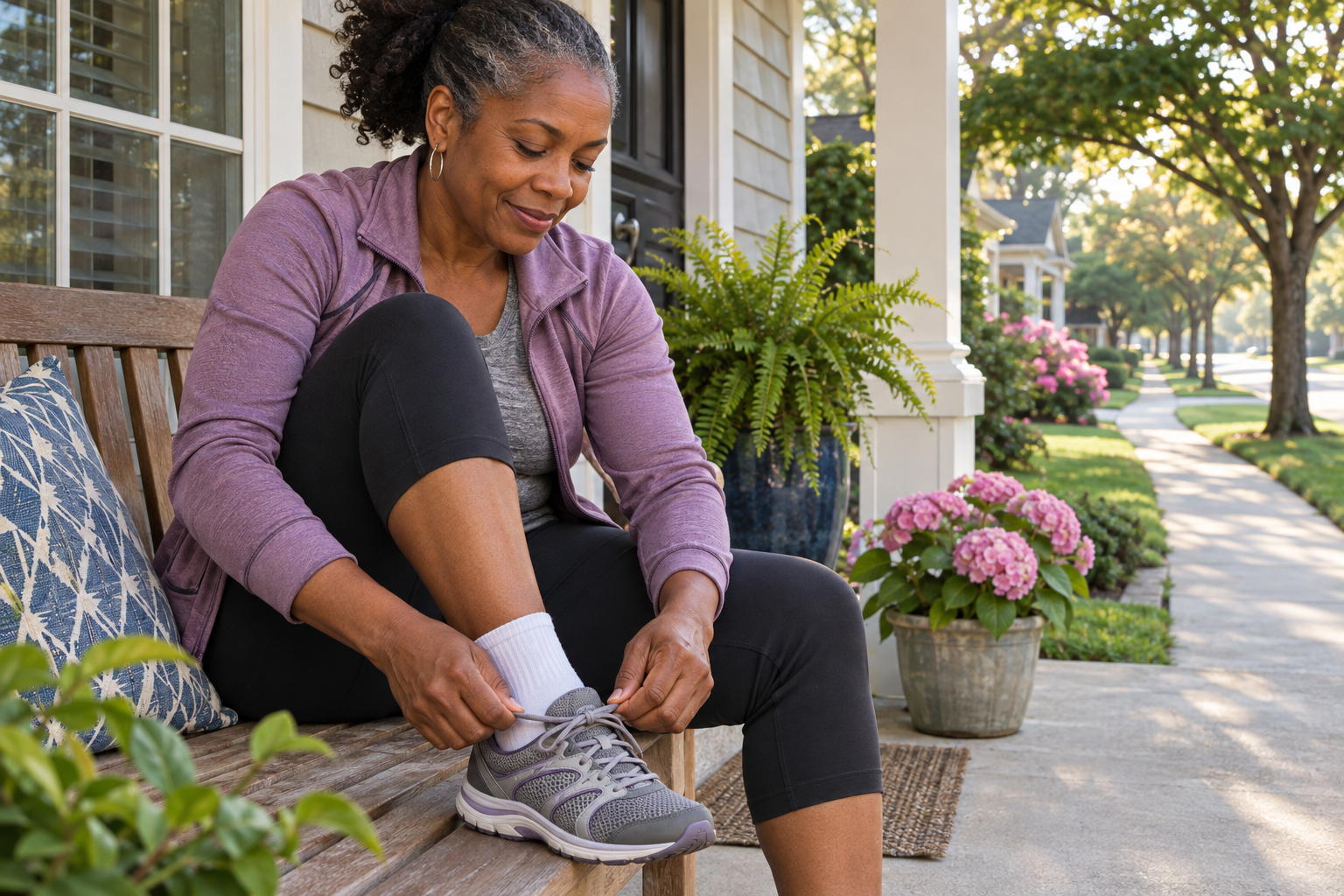
A warm spot on the back of your heel can seem too minor to interrupt a walk. But when a shoe keeps moving against the same patch of skin, that small irritation can turn into a painful blister. The best time to change something is often when you first feel the rubbing.
Start with the shoes and socks you already own. A few minutes checking where they move, pinch, or bunch can help you figure out what to change before a long walk, a trip, or a shift spent on your feet.
Check fit while you are moving
A shoe can feel fine when you stand still and rub once you start walking. Try it with the socks you plan to wear. Walk a short loop and notice whether your heel slides with each step, your toes press against the front, or a seam rubs one spot. Notice whether the discomfort is on one foot or both. A specific location gives you a better clue than a general feeling that the shoes need breaking in.
If the shoes are new, try them on a short outing where you can easily change pairs or turn back. For a day with more walking than usual, a familiar pair that already works with your chosen socks gives you fewer surprises. If you need to tighten the laces so much that the shoe pinches to keep your heel from moving, try a different fit before committing to a longer outing.
Choose socks that stay smooth
Look for socks that fit without wrinkles and stay in place when you walk. If your feet get sweaty, MedlinePlus suggests considering materials such as nylon or acrylic that help move moisture away from the skin. Check the toe seam and the heel of the sock. A seam that falls under a tight part of the shoe or a heel that slips down can be worth fixing even if the material itself feels comfortable.
For a long outing, a dry spare pair takes little space. If your socks get wet, stop somewhere safe and change them. Before putting your shoe back on, shake out any grit and straighten the sock. If thicker socks make your toes feel crowded, test another pair that fits the available space.
Take a rubbing spot seriously
When you first feel heat, stinging, or rubbing, take a break and look at the spot. Straighten a folded sock, adjust the laces if they are pressing on the area, or switch shoes if you can. If you know one spot tends to rub, the American Academy of Dermatology suggests using a securely applied soft bandage or moleskin to protect it. Check that the added layer leaves enough room in the shoe.
If rubbing continues after you make an adjustment, shorten the outing or change footwear. For the next walk, remember where the rubbing started and which shoe and sock combination you wore. Changing one thing at a time can help you tell which adjustment makes a difference.
Protect the skin if a blister forms
Avoid popping a blister. The skin over the fluid protects the tender area underneath. Cover it loosely with a clean bandage and avoid the footwear or activity that keeps rubbing it. If it opens on its own, gently wash the area with soap and water and cover it again. Leave the overlying skin in place.
Seek medical advice if the area develops pus, increasing redness, swelling, or worsening pain. MedlinePlus also advises people with diabetes or poor circulation to contact a health professional if they develop a blister. If a blister repeatedly appears in the same place, ask a clinician about it and bring the shoes you usually wear when it happens. For an ordinary outing, a short fit check, smooth socks, and a plan to stop at the first sign of rubbing are practical starting points.
Explore the sources
Prepared with AI assistance for True Healthy Products LLC. Sources inform this educational guide; their inclusion does not imply endorsement of our company or products. See our editorial approach.