THE HEALTHY LIVING JOURNAL
Foot Care as You Age: Everyday Checks and Questions to Ask
Build a comfortable foot-care routine, notice changes early, and know when diabetes, numbness, or a new sore needs professional advice.
General educational information · Sources listed below
Give your feet a regular check
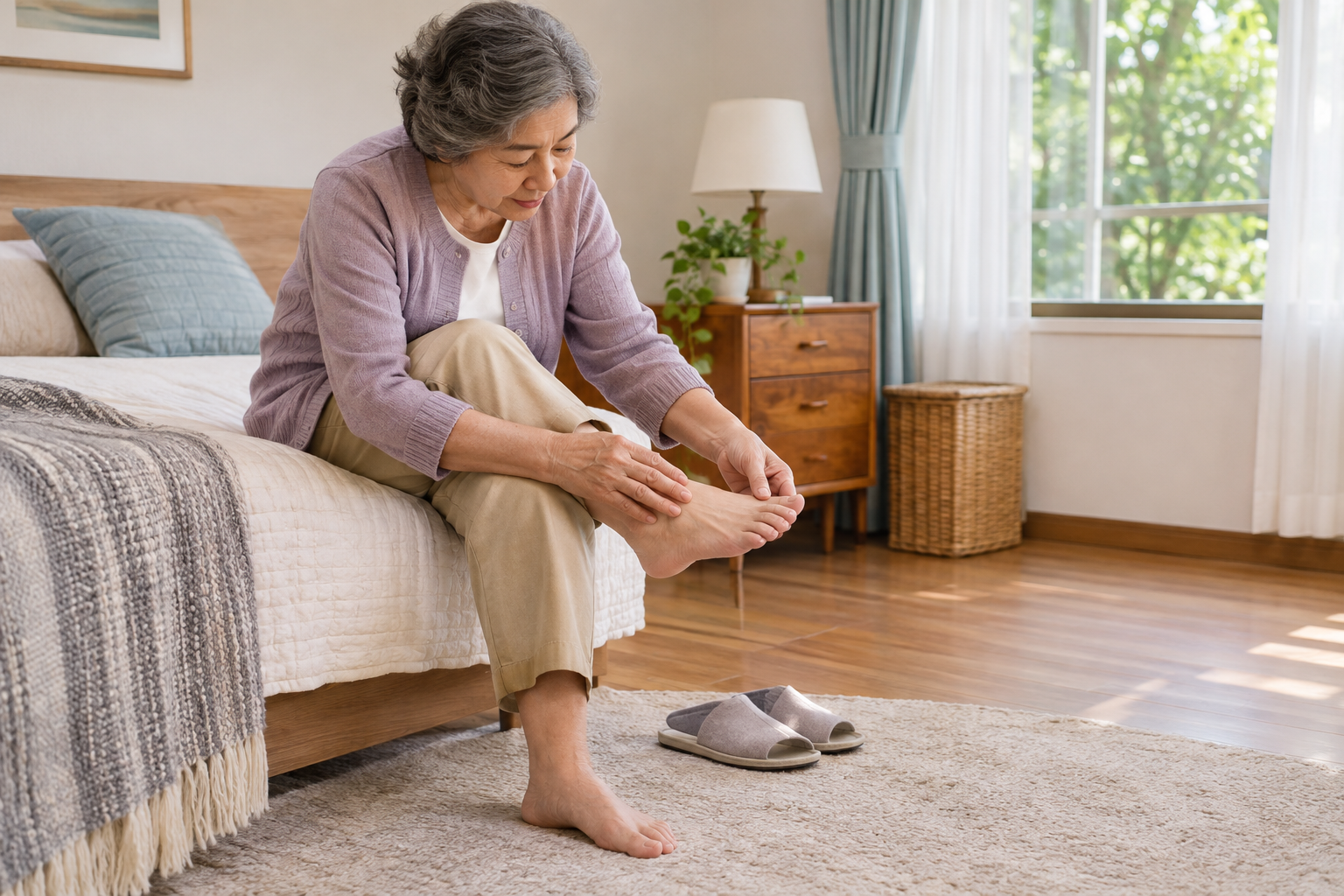
Foot care as you age starts with paying attention to changes rather than assuming discomfort is unavoidable. A brief look at your skin, nails, and footwear can help you notice a developing problem. MedlinePlus recommends regular foot examinations and comfortable shoes that fit. [1]
Choose a moment that already fits your day, such as changing socks. Sit in a stable chair with good lighting instead of balancing on one leg. If reaching your feet is difficult, ask your healthcare team about a safe way to inspect them or get assistance.
Look for changes, not a diagnosis
Notice new rubbing, broken skin, discoloration, swelling, or changes around a nail. Compare what you see with what is usual for you. Tingling and numbness are also worth reporting, even when the skin looks normal. A home check cannot establish the cause of these symptoms. [1]
A short note can make the conversation easier: where the change appeared, when you first saw it, whether a shoe rubs there, and what has changed since. Avoid repeatedly treating an unexplained problem with different products while postponing an assessment. Foot pain deserves attention when it limits ordinary activities.
Keep washing straightforward
Wash your feet with soap and lukewarm water, then dry them carefully. Make the setup comfortable and steady, with the towel within reach. A basic routine is easier to repeat than a collection of treatments with unclear purposes. Daily washing is part of general foot-care guidance. [1]
If you have reduced sensation, ask your clinician how to check water temperature safely. Do not rely on a numb foot to judge whether water is too hot. People with diabetes need particular precautions because nerve damage can make injuries harder to notice. [2]
Check how your shoes feel today
Feet should have comfortable space inside shoes, with no persistent rubbing or squeezing. Check the inside for rough areas or objects before putting footwear on, especially if you have reduced feeling. A previously comfortable pair may no longer suit your feet or your current walking needs. [1,2]
Think about the whole day rather than the first minute in a shoe. Does a seam bother one toe after errands? Is the heel slipping? Bring that information to a footwear or foot-care appointment. Repeated friction is a reason to reconsider fit rather than simply tighten the laces.
Make nail care safe and manageable
General guidance is to trim toenails straight across and avoid cutting them too short. If your vision, reach, or hand control makes trimming difficult, seek help instead of using an awkward position or sharp tools you cannot control comfortably. Your clinician can advise who should provide that care. [1]
Diabetes, circulation problems, thick nails, and loss of sensation may change what is safe to do at home. Do not cut corns or calluses yourself. Ask before using chemical removers, and follow the individualized foot-care plan your diabetes team provides rather than a generic beauty routine. [2]
Know when to ask for help
A new sore, spreading redness, drainage, or signs of infection should not be ignored. People with diabetes should contact their healthcare team promptly about foot injuries or ulcers. The absence of pain does not guarantee that an injury is minor when sensation is reduced. [2]
Ask your clinician which changes require same-day advice and how to reach the team. This is especially useful before weekends or travel. A clear contact plan removes guesswork and helps you act on a new problem instead of waiting to see whether it becomes painful.
Bring a useful question to your next visit
Ask whether your skin, nails, sensation, circulation, or footwear needs a closer assessment. Mention changes in walking and any difficulty caring for your feet. Regular observation supports professional care; it does not replace an examination when symptoms or an injury need attention. [1,2]
Your routine can remain small: a stable place to sit, good light, a comfortable wash, and a quick check before shoes go on. Choose the steps you can repeat safely, and arrange help for the ones you cannot. Consistency is more useful than an elaborate routine you struggle to maintain.
Explore the sources
Prepared with AI assistance for True Healthy Products LLC. Sources inform this educational guide; their inclusion does not imply endorsement of our company or products. See our editorial approach.