THE HEALTHY LIVING JOURNAL
How to Care for Minor Cuts and Scrapes
How to clean and cover a shallow cut or scrape and recognize when to get help.
General educational information · Sources listed below
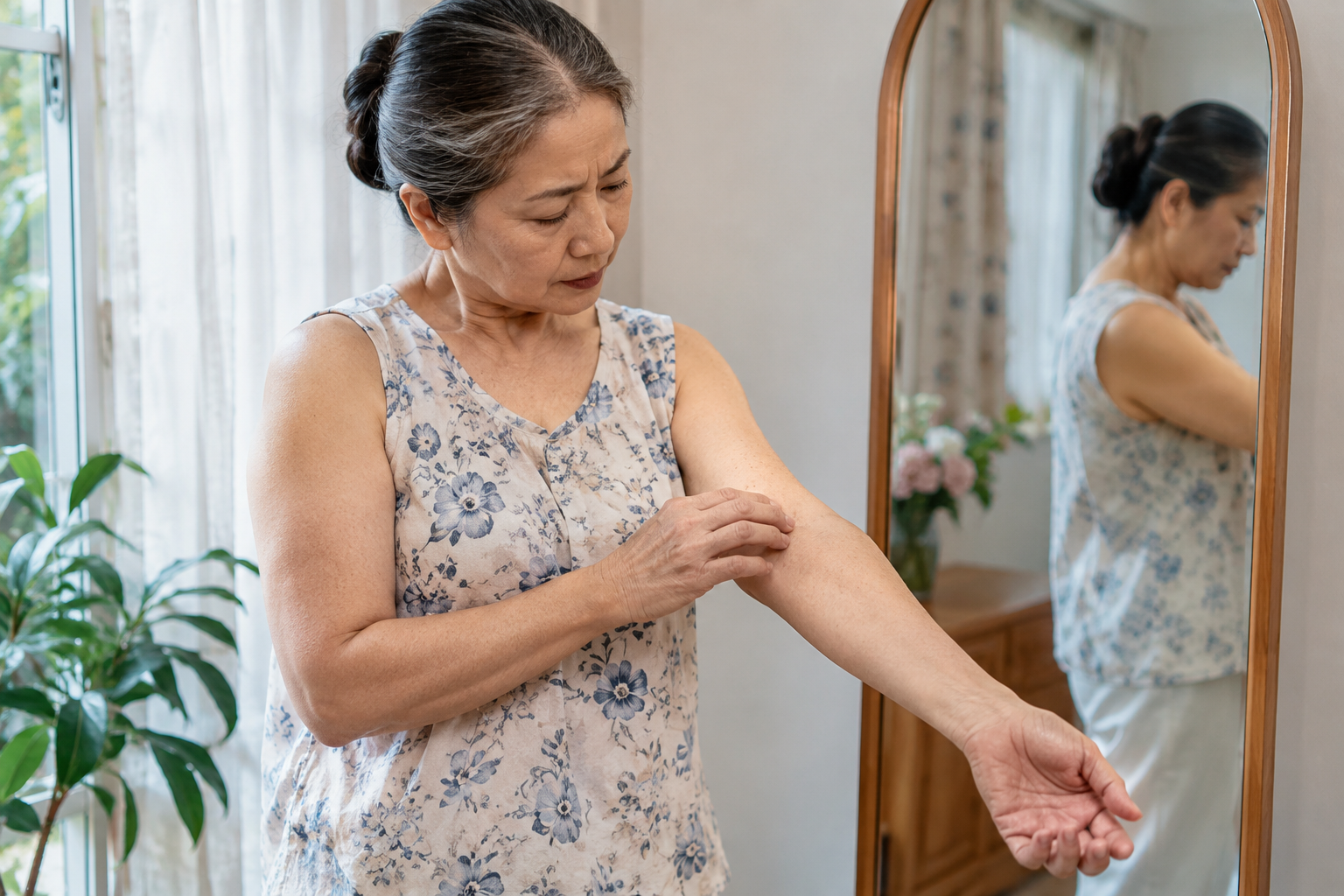
A shallow cut from a sheet of paper or a scrape from brushing against a rough surface can interrupt your day. Once you have a clean place to sit or stand, take a moment to see how much the injury is bleeding and whether the skin edges stay close together. This guide covers small, superficial injuries that can be cleaned and covered at home.
A few basic supplies can make the job easier: clean running water, mild soap, gauze, plain petroleum jelly, and a bandage large enough to cover the injured area. Keep them together so you can reach them without opening several drawers while holding pressure on a cut.
If the injury is bleeding heavily, looks deep, or contains something stuck in the skin, get help. Seek emergency care for severe bleeding and apply firm pressure with clean material while help is on the way.
Stop the bleeding and rinse away loose dirt
Wash your hands before touching the injury if you can do so safely. For a small cut that is bleeding, press clean gauze or a clean cloth directly over it. Keep the pressure steady. It is tempting to lift the cloth every few seconds, but give the pressure time to work before you check.
Once bleeding is controlled, gently rinse the area with cool or lukewarm running water. Mild soap can help remove grime. A scrape may look more dramatic than a cut because it covers a wider area, so let the water do the work and avoid aggressive scrubbing. If you cannot rinse out the dirt or suspect something is embedded, have a clinician look at it.
Cover the scrape without sticking to it
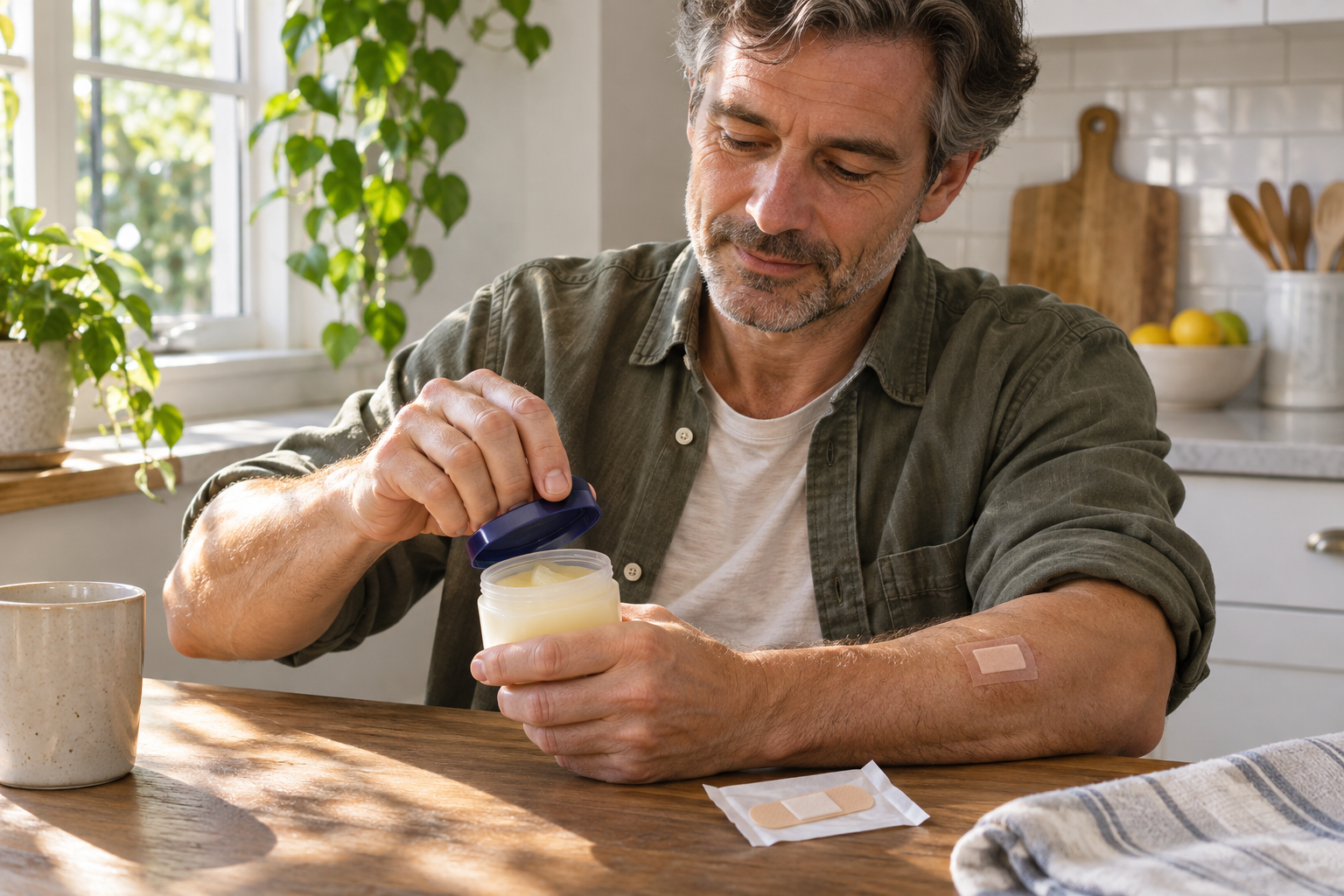
The American Academy of Dermatology recommends plain petroleum jelly to keep a minor cut moist as it heals. After cleaning, apply a thin layer and cover the spot with a clean bandage. A squeeze tube makes it easy to dispense a small amount without dipping into a container. For a minor cut, routine antibiotic ointment is generally unnecessary under the academy's guidance.
Choose a dressing that covers the whole scrape, with any adhesive resting on intact skin. A small adhesive bandage may be enough for a nick on a finger. A broader scrape might need a nonstick pad held in place with tape. If a bandage feels tight or shifts whenever you move the joint, try a different size or shape.
Check the area when you change the bandage
Change the dressing daily and sooner if it gets wet or dirty. Wash your hands first, then look at the skin in good light. It may help to notice whether the sore area is getting smaller or whether redness, warmth, swelling, or pain is spreading or increasing. Drainage that looks like pus, fever, or a red streak spreading from the injury are reasons to contact a medical professional.
If a dressing sticks, take your time removing it. Once you can see the injury clearly, clean it gently and put on a fresh dressing. Keep a spare bandage handy when doing chores or spending time outside so you can replace one that comes loose.
Know when to get help
Get medical advice for a large or deep wound, a bite, a puncture, or a cut you cannot clean. If steady pressure does not stop the bleeding, seek urgent care. A clinician can also advise you about tetanus protection, especially if the wound is dirty or you are unsure when you last had a booster.
For an ordinary scrape that is getting better, the routine is simple: keep it clean and protected, and check how it looks when you replace the dressing. Restocking the supplies you used makes it easier to handle the next small accident.
Explore the sources
Prepared with AI assistance for True Healthy Products LLC. Sources inform this educational guide; their inclusion does not imply endorsement of our company or products. See our editorial approach.