THE HEALTHY LIVING JOURNAL
How to Trim Toenails Straight Across
Learn how to use small cuts, leave the right amount of nail, and smooth rough edges without digging into the corners.
General educational information · Sources listed below
Before you clip
A toenail can look overdue for a trim even when only one corner is catching on your sock. Before you clip, look at the whole front edge. The goal is to leave a straight edge with enough nail to reach the tip of the toe. Taking off extra length or digging down the sides can make it easier for an edge to grow into the surrounding skin.
This routine works best when the nail is easy to see and the surrounding skin feels comfortable. Give yourself a stable seat, enough light to see where the nail ends, and a place to rest your foot. If you have to bend so far that you lose sight of the clipper blades, pause and change your setup.
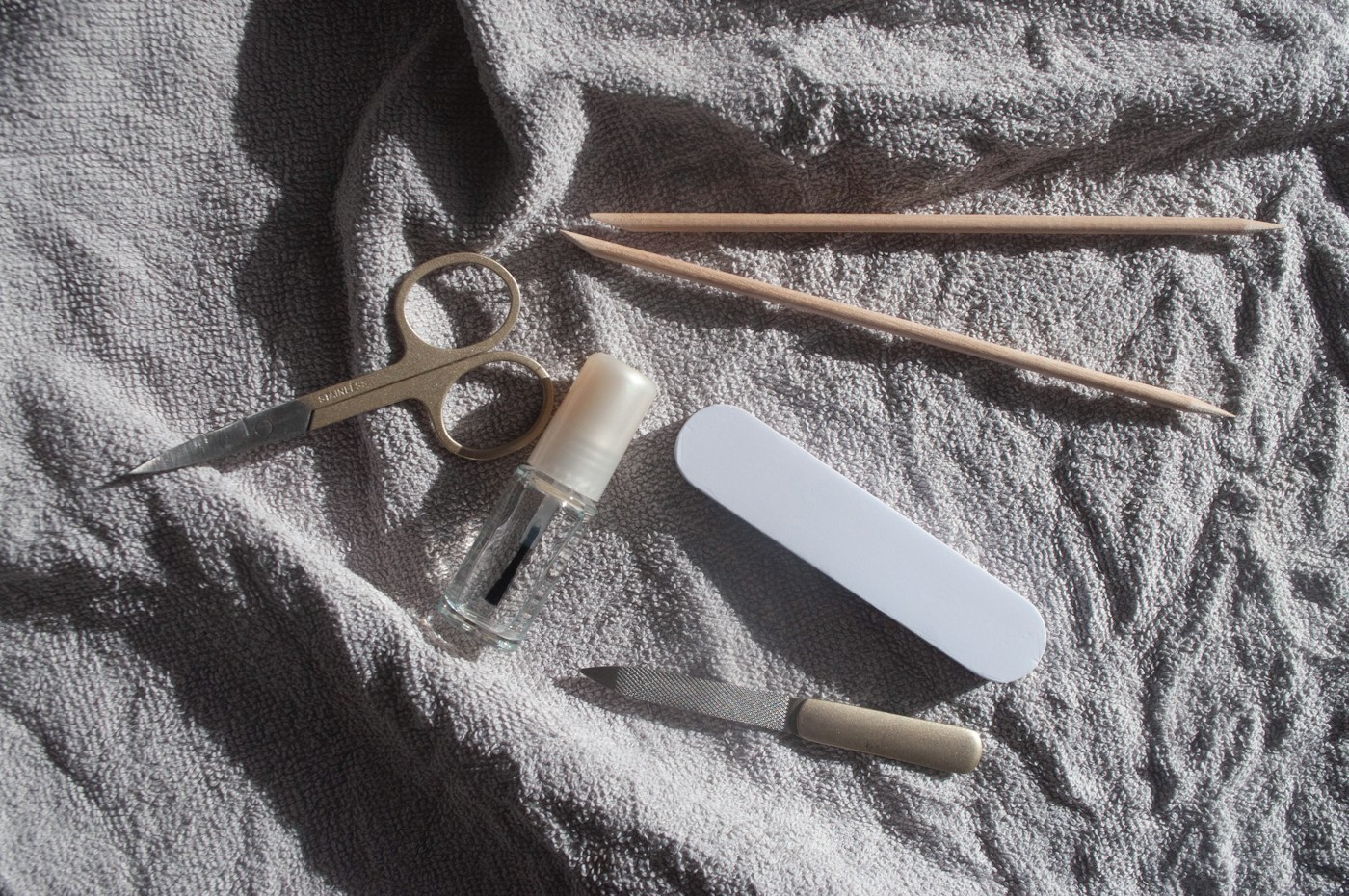
For routine trimming, set out clean toenail clippers and a nail file. Check how the clippers sit against the front of the nail before squeezing. You should be able to see the part you intend to remove and keep the skin clear of the blades.
Make the nail easier to cut
The American Academy of Dermatology suggests trimming nails after a bath or shower, when they are softer. You can work this into a routine you already have. Dry your foot and hands so you can hold the clippers steadily, and move a lamp closer if your own shadow falls across your toes.
Keep the clippers and file clean between uses. The academy recommends disinfecting nail tools monthly by scrubbing them with a small brush dipped in 70% to 90% isopropyl alcohol, then rinsing the tools in hot water and drying them completely before putting them away. Pick a spot where they can dry before they go back into a case or drawer.
Use small cuts to make one straight edge
Position the blades across the front of the nail. If the nail is wider than the clipper opening, make several small cuts along the same line. Reposition the tool between cuts so you can see what the blades will take off. The big toenail often takes more than one clip, and there is no benefit to forcing the tool through the full width at once.
Look at the length from above. Mayo Clinic recommends keeping toenails even with the tips of the toes. Leave both corners visible at the front. If you are tempted to turn the clippers sideways to reach an edge tucked against the skin, stop. A cut that follows the rounded outline of the toe can leave the corners shorter than the middle.
Smooth snags with a file
Run a fingertip lightly over the front of the nail. If it catches on a rough spot, use a few strokes of a nail file in one direction. Keep the file at the front edge and remove just enough roughness to stop the snag. Check again after a few strokes so you can see how much length remains. Leave the cuticle and the skin along the nail alone.
Check how your toes feel in your usual shoes. If the shoe presses the toes together or pushes against the nail tips, trimming them shorter can leave them more vulnerable to pressure. A shoe with room around the toes can help reduce crowding.
Know when to ask for foot care
An edge that already hurts, looks swollen, or has skin growing over it needs a different approach from routine clipping. Avoid digging out the corner. Seek medical advice for severe discomfort, pus, or redness that is spreading. Mayo Clinic also advises seeking care for a foot sore or infection if you have diabetes or another condition that causes poor blood flow to the feet.
Ask a foot care professional for help if you cannot see or reach the nail clearly, or if the nail is too thick to trim comfortably. Mention any loss of sensation or circulation problems when you ask which parts of nail care you can safely do at home.
Explore the sources
Prepared with AI assistance for True Healthy Products LLC. Sources inform this educational guide; their inclusion does not imply endorsement of our company or products. See our editorial approach.