THE HEALTHY LIVING JOURNAL
Removing Makeup Gently: A Simple Evening Routine Without Scrubbing
Plan makeup removal around the products you wear, keep tools personal, and avoid turning a nightly task into an aggressive scrub.
General educational information · Sources listed below
Make removal part of wearing makeup
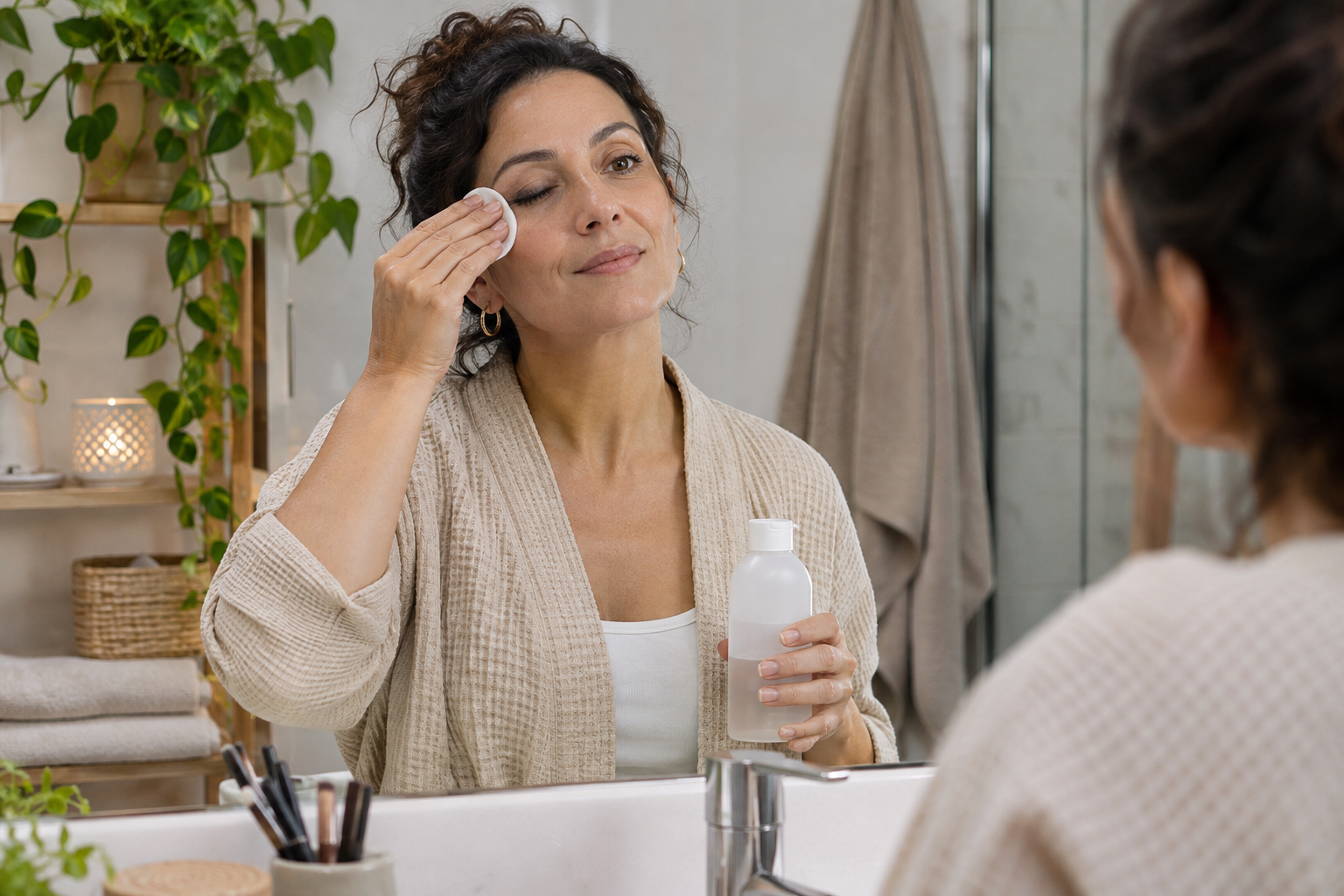
An evening makeup routine is easier to manage when removal is planned before you are exhausted. Keep the products you already tolerate and a clean towel where you can reach them. The goal is to remove the day's cosmetics comfortably, not to produce a perfectly polished bathroom ritual or buy a separate product for every step.
The American Academy of Dermatology recommends taking off makeup, including eye makeup, before going to bed. Its guidance for acne-prone skin pairs makeup removal with gentle cleansing and advises against scrubbing. Removing makeup does not require rubbing until the skin feels tight or irritated. [1]
Think about what you wear on an ordinary day. A light layer of makeup may involve a different removal process from a long-wearing eye product. Read the removal directions for the actual cosmetics in your bag. If instructions are unclear, resolve that question before experimenting close to your eyes or adding several unfamiliar products.
Match the remover to the task
Choose a product intended for the area where you will use it and follow its label. A face product is not automatically suitable for the eye area. For people with acne-prone skin, AAD recommends an oil-free makeup remover and looking for terms such as non-comedogenic or won't clog pores when choosing cosmetics and skin-care products. [1]
Set aside enough time to follow the remover's instructions rather than repeatedly wiping in a hurry. If the process consistently requires force, review whether the product is appropriate for the makeup you wear. A comfortable routine may involve changing a cosmetic you find difficult to remove instead of escalating the intensity of the cleaning step.
Use a light touch and a manageable sequence
AAD recommends gentle fingertip cleansing with lukewarm water after makeup removal. Its advice specifically discourages scrubbing, including while removing makeup. Keep the sequence simple enough that you know which product you are using and why, rather than layering several cleansers because a social-media routine makes that seem necessary. [1]
Put the items in the order you use them, then return them to their place afterward. This is a practical organization choice, not a clinical rule about how a bathroom must look. A predictable setup can help on evenings when the routine competes with travel, caregiving, or a late return home.
Keep makeup and applicators personal
Do not share makeup, brushes, or applicators. AAD explains that shared tools can transfer material from another person's skin and can spread contagious infections. It recommends cleaning makeup brushes weekly. Consider a simple reminder that fits your schedule rather than waiting until every brush looks visibly dirty. [1]
Separate clean tools from those awaiting cleaning, and follow the manufacturer's care and drying directions. If you travel, leave enough room in the bag to organize the items you actually need. Avoid packing so many similar products that you cannot tell which one is intended for removal and which one is a leave-on cosmetic.
Have a realistic plan for unusually late nights
AAD's acne guidance says sleeping in makeup can contribute to breakouts, even with products labeled non-comedogenic. It identifies a non-comedogenic makeup-remover towelette as an option when someone is too tired to wash. That contingency is useful to distinguish from a claim that repeated harsh wiping is necessary for clean skin. [2]
For a trip or a long event, pack a familiar removal option before leaving. Keep the plan proportionate: you need a way to remove your makeup, not a second suitcase of skin care. If a convenient product repeatedly stings or leaves you uncomfortable, reconsider that option rather than assuming discomfort proves it is effective.
Review irritation instead of adding more steps
AAD warns that washing repeatedly throughout the day can irritate acne-prone skin. If your evening routine is becoming a cycle of wiping, washing, and trying again, pause to review the products and instructions. More passes are not automatically a better result, and a new scrub is not the only possible response. [2]
Persistent irritation or breakouts deserve a dermatologist's assessment. Bring the names of your makeup, remover, and other skin-care products, along with when the problem began. Avoid diagnosing the cause from one difficult evening, especially if several products changed together. A clear account gives the conversation a better starting point.
Keep the routine easy to repeat
Choose the few steps that have a clear purpose and a place in your evening. Check that supplies are available before the remover or clean towels run out. When a routine regularly fails, adjust the practical obstacle first: the timing, the location of supplies, or the complexity of what you are trying to do.
Comfortable removal is part of caring for skin while enjoying makeup. It does not need to promise pore detoxification, wrinkle reversal, or flawless results. A gentle, understandable process and help for persistent problems are more useful goals than an increasingly aggressive nightly clean.
Explore the sources
- American Academy of Dermatology: Makeup and Acne ↗
- American Academy of Dermatology: Habits That Can Worsen Acne ↗
Prepared with AI assistance for True Healthy Products LLC. Sources inform this educational guide; their inclusion does not imply endorsement of our company or products. See our editorial approach.