THE HEALTHY LIVING JOURNAL
Resistance Bands for Beginners: Choosing and Using Them Safely
Learn how to inspect a resistance band, choose manageable tension, and avoid unsafe anchors or recoil when beginning strength exercises at home.
General educational information · Sources listed below
Treat a band as exercise equipment
Resistance bands can make strength training portable and accessible, but their simplicity can be misleading. A stretched band stores tension and can recoil if it slips, breaks, or comes free from an anchor. A sensible routine begins with the equipment and setup, not only the exercise. [1]
Choose a small number of movements you understand and can control. If you are new to resistance exercise, a qualified instructor or physical therapist can help you learn the starting position, direction of pull, and return phase before you add more tension.
Understand the band you own
Bands come as flat strips, loops, or tubing, sometimes with handles or accessories. They do not all work in the same way. Read the manufacturer's directions and check which exercises and attachments are intended for that particular product. [1]
Color alone is not a universal guide to resistance. Different brands may use different color systems. Instead of matching someone else's band by appearance, choose a level that lets you perform the whole movement steadily. Ask for help if you cannot tell whether the tension is appropriate.
Inspect before each session
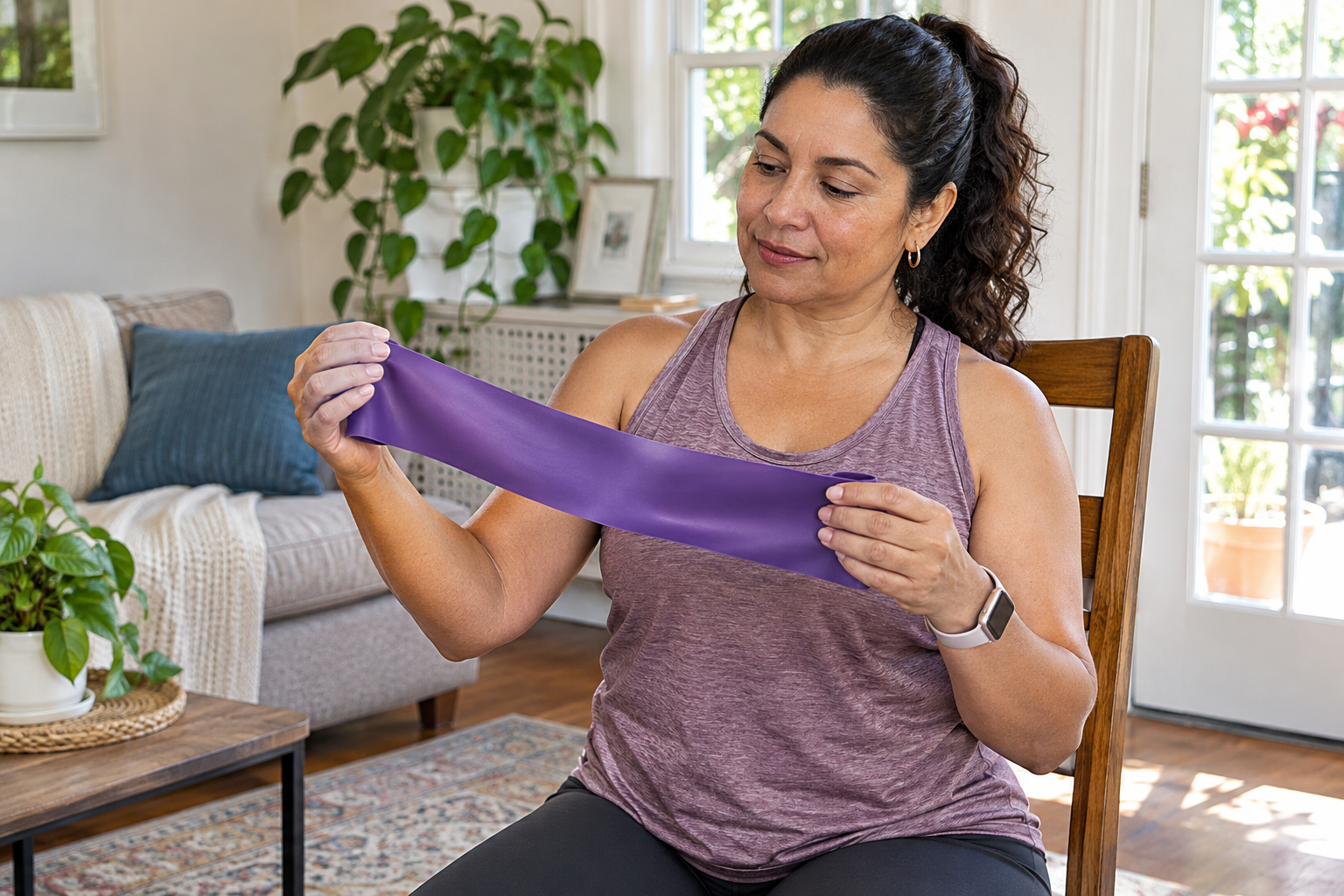
Look for tears, thinning, cracks, or damage near handles and connections. Do not use a band that appears worn or compromised. Store it according to the manufacturer's directions so heat, sunlight, or contact with sharp objects does not shorten its useful life. [1]
Keep the practice area clear. Secure footwear, stable seating where needed, and enough room to move all matter. If you have a latex allergy, check the material rather than assuming all elastic exercise equipment is latex-free. A different product may be necessary.
Choose an anchor carefully
Only use an anchoring method approved for your band and the exercise. A lightweight chair, improvised hook, or questionable door setup can fail under tension. Do not copy an online demonstration without checking whether your equipment and surroundings support the same arrangement. [1]
Be particularly cautious when a band could recoil toward your face or eyes. Avoid overstretching it, follow its extension limits, and keep others out of the line of pull. If you are unsure whether an anchor is secure, stop and get instruction before continuing.
Control the return as well as the pull
Pulling against the band is only part of the exercise. Return slowly and deliberately rather than letting the band snap you back. Use a range you can manage while keeping your body position steady. Breathing should continue naturally instead of becoming a prolonged breath hold. [1,2]
If you must twist, jerk, or change your posture to finish, the exercise may be too demanding or poorly set up. Lower the tension or seek a simpler variation. The objective is a controlled movement, not stretching the band as far as physically possible.
Progress with a clear plan
Resistance exercise belongs within a balanced routine, and adults are generally advised to include muscle-strengthening activity on at least two days each week. The exact exercises and starting workload should reflect your abilities and health history. [3]
Increase challenge gradually. You might first improve control or add a few comfortable repetitions before considering a stronger band. Do not change tension, range, and session length all at once. A simple record of what you used can make your next session easier to plan.
Get help when the exercise does not feel right
Stop for pain, dizziness, or unusual breathing symptoms. Seek tailored advice if you have a recent injury, surgery, significant balance problems, or a medical condition that affects activity. A band is not automatically safe because it is lighter and less expensive than a weight. [2]
Before your next session, inspect the band, check the space, and name the movement you intend to practice. If any part of the setup is uncertain, resolve it first. Learning a few reliable exercises is more valuable than assembling a long routine with equipment you do not yet know how to use.
Explore the sources
Prepared with AI assistance for True Healthy Products LLC. Sources inform this educational guide; their inclusion does not imply endorsement of our company or products. See our editorial approach.