THE HEALTHY LIVING JOURNAL
What Food Can You Keep After a Power Outage?
Use the outage duration, temperature readings, and federal food safety charts to decide what to keep from your fridge and freezer.
General educational information · Sources listed below
Start with the outage time and the refrigerator door
When the lights come back, a carton of milk can look exactly as it did before the power went out. To decide what to keep, start with the time the power failed, how long the refrigerator stayed closed, and any temperature readings you have. Looking at the food or smelling it cannot tell you whether it is safe. Never taste it to find out.
A closed refrigerator generally keeps food cold for up to four hours without power, according to the CDC. If the electricity is still out, keep the door closed as much as possible. Note the start time on your phone or on paper. If you notice the outage only when you get home, check whether your utility can tell you when it began.
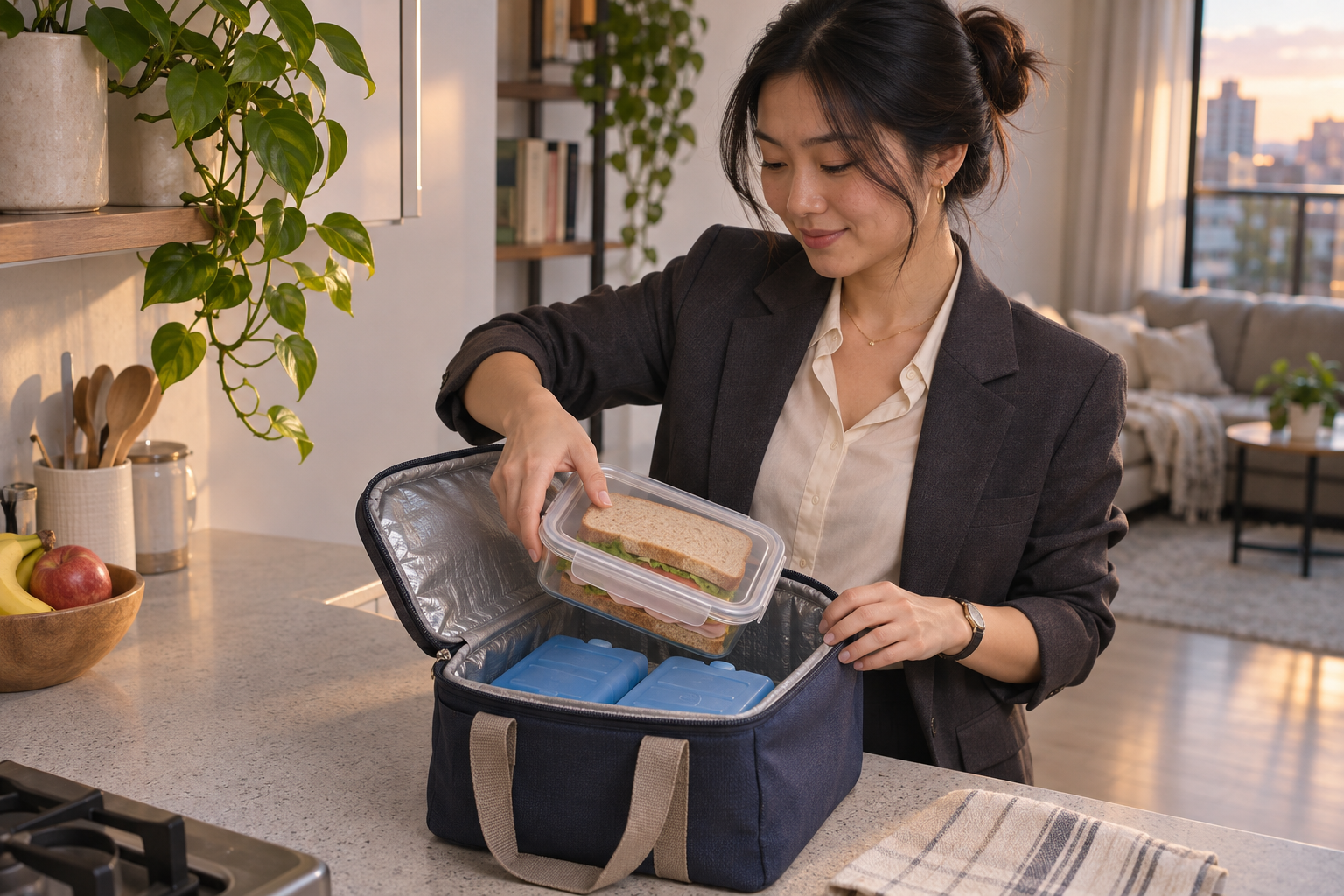
If the outage reaches four hours and you have ice and a cooler, the CDC advises using them to keep refrigerated perishables at 40°F or colder. Keep a thermometer in the cooler to check that it stays cold. Moving food to ice can help maintain a safe temperature, but it cannot make food safe again after it has already warmed too much.
Sort refrigerated foods by what they are
If the refrigerator had no power for more than four hours and you have no reliable way to tell whether perishables stayed at 40°F or colder, follow the CDC’s advice to discard them. Start with the items you might otherwise save for the next meal, such as deli meat, milk, eggs, cooked rice, and leftover chicken or pizza. A sealed container protects against spills. It does not tell you how warm the food got.
The FoodSafety.gov chart helps when you are looking at a shelf full of foods with different storage needs. For example, it lists whole, uncut fruit and hard cheeses such as cheddar among foods that can generally be kept after a refrigerator warms. It gives different advice for cut fruit and soft cheeses such as ricotta. Look up foods individually, especially if the label says to refrigerate after opening or the food is part of a prepared dish.
Check temperatures as soon as it is practical after the power returns. A thermometer can help you judge how cold the food is at that moment. If the refrigerator has already been running again, a cold reading cannot reconstruct what happened earlier. When you cannot establish that a perishable item stayed cold enough, discard it.
Check the freezer separately
A shut, full freezer holds its temperature for about 48 hours. A half-full one generally holds it for about 24 hours. Those estimates assume the door stays closed. When it is time to check, look at packages individually. Federal guidance says food that still has ice crystals or is at 40°F or below can generally be cooked or refrozen. Refreezing can change its texture, even when it is safe.
Use the frozen-food chart for exceptions. For example, it advises discarding ice cream and frozen yogurt that have started to thaw, even if they feel cold. Other packages in the same freezer may have held their temperature, so the condition of one item does not settle what to do with the rest.
Set up for the next outage
Keep an appliance thermometer in each compartment so you can check the refrigerator and freezer without guessing. For normal operation, aim for 40°F or below in the refrigerator and 0°F or below in the freezer. Freeze a few gel packs or containers of water, and keep a cooler where you can reach it quickly.
Put the federal food-safety chart somewhere you can find it on your phone, or keep a printed copy with the cooler. During an outage, keeping doors closed buys time. When the power returns, sort the refrigerator and freezer separately and use what you know about time and temperature to decide what stays.
Explore the sources
- CDC — Keep Food Safe After a Disaster or Emergency ↗
- FDA — Food and Water Safety During Power Outages and Floods ↗
- FoodSafety.gov — Food Safety During Power Outage ↗
Prepared with AI assistance for True Healthy Products LLC. Sources inform this educational guide; their inclusion does not imply endorsement of our company or products. See our editorial approach.