THE HEALTHY LIVING JOURNAL
How to Keep a Simple Activity Log Without a Fitness Tracker
A few practical notes can help you remember your movement and find routines worth repeating.

General educational information · Sources listed below
A useful record can be small
An activity log can answer a practical question: what movement actually fits your life? You do not need a watch, a step target, or a subscription to begin. A notebook or a short note on your phone can hold enough information to help you remember what you tried and decide what to repeat.
NIH’s National Institute of Diabetes and Digestive and Kidney Diseases recommends recording the activity, its duration, and how you felt. CDC also offers an activity diary. The aim is a usable record of your own experience. It is not a test of willpower or a medical assessment.
Choose four things to write down
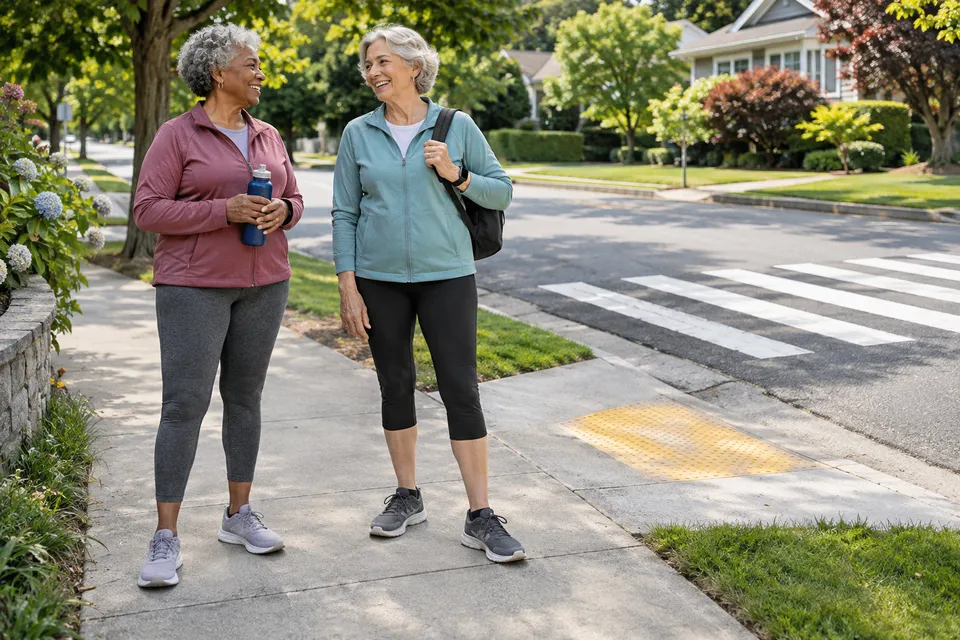
Start with the date, the activity, approximately how long it lasted, and a brief comment. For example: Tuesday, neighborhood walk, about twelve minutes, enjoyed the quieter route. Use ordinary language that will still make sense when you look back next week. There is no need to turn every entry into a detailed workout report.
Put the record somewhere convenient. A notebook near your walking shoes may work better than an app you rarely open. If you use your phone, give the note a clear title and keep it easy to find. Choose a format you can update without first charging another device or remembering another password.
Keep different kinds of movement visible
Give different activities their own entries. A walk, a resistance-band session, and stretching can all appear in the same record without being treated as interchangeable. You might use simple labels such as walking, strengthening, or flexibility. That makes the page easier to review than one unexplained total.
CDC’s general adult recommendations include at least 150 minutes of moderate-intensity activity weekly and muscle strengthening on two days. Some activity is better than none, and activity can be spread through the week. A log can help organize what you do, but writing down an activity does not establish its intensity or mean it meets every part of those recommendations.
Record context rather than chasing perfect numbers
Approximate times are useful if they are honest and consistent. If you forgot the start time, write an estimate rather than inventing a precise number. A short note such as rain changed my route, or a friend joined me, may explain more about the day than another decimal place.
Keep planned activity separate from completed activity. You could mark a future walk in a calendar, then add the actual entry afterward. If plans change, record what happened without trying to repair the page. Blank spaces do not need to be filled with guesses. You can simply resume with the next activity you remember clearly.
Review the page with one question
At the end of a week, ask which entry describes something you would willingly repeat. Perhaps a lunchtime walk was easier to arrange than an evening outing. Perhaps a class was enjoyable but its travel time was inconvenient. These are practical observations you can use when choosing your next opportunity to move.
Try changing one organizational detail, such as putting shoes by the door or choosing an indoor backup location. These are examples of planning, not promises of better fitness. Keep your earlier entries so you can compare your own experience over time, without ranking yourself against someone else’s schedule or device totals.
Let comfort and safety guide the plan
A log should never pressure you to exercise through pain or to make up missed sessions. NIDDK advises starting slowly, increasing activity gradually, and addressing existing health issues with a health professional. If you have a chronic condition or an injury, ask what activities and amounts are appropriate for you.
Use the notebook to remember questions for that conversation, rather than to diagnose symptoms yourself. Stop activity if you develop pain, dizziness, faintness, nausea, or unusual breathlessness. The most useful record is one you can maintain comfortably and use to make thoughtful choices about your next activity.
Explore the sources
Prepared with AI assistance for True Healthy Products LLC. Sources inform this educational guide; their inclusion does not imply endorsement of our company or products. See our editorial approach.